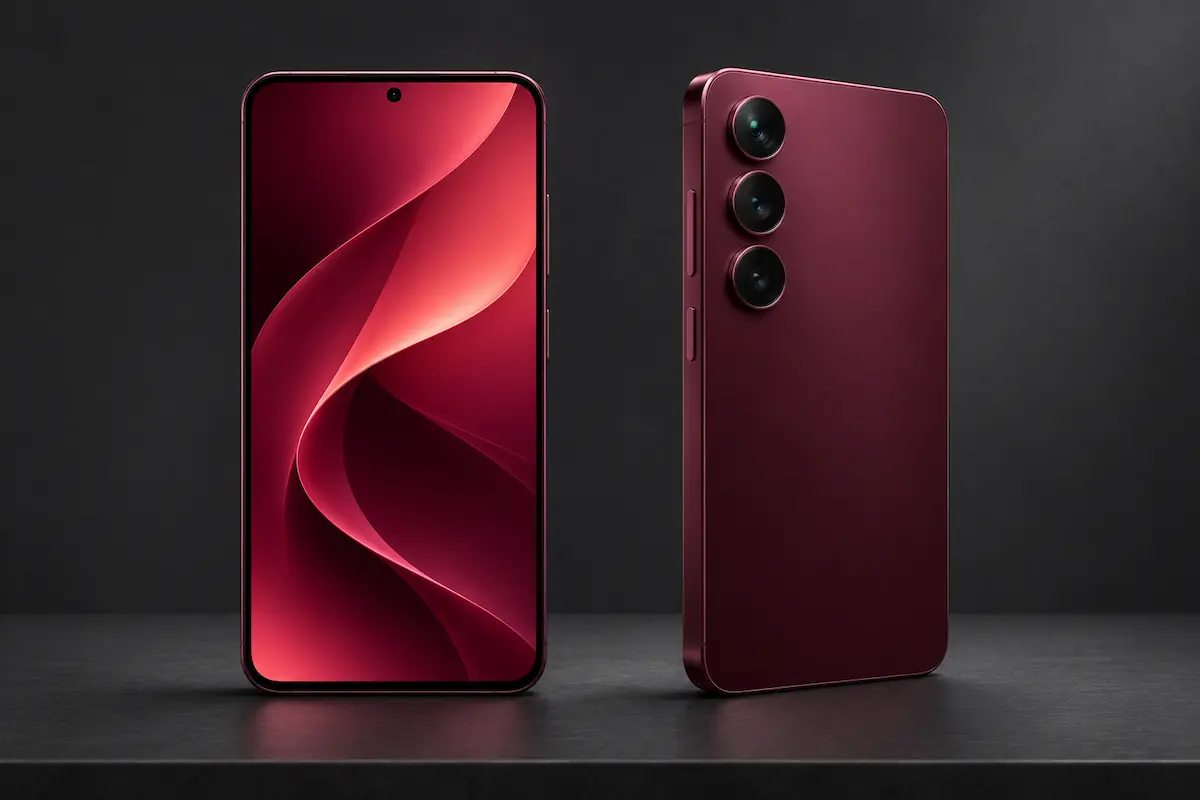
The iPhone 18 Pro has been on sale since September, so the launch hype has settled and real reviews, software updates and prices are in. Here is what actually changed, what you will notice in daily use, what it costs and whether it belongs on your upgrade list.
The iPhone 18 Pro is already here
Apple announced the iPhone 18 Pro and iPhone 18 Pro Max on September 9, 2026, opened preorders on September 12 and started sales on September 18. Another 20 countries and regions followed on September 25. Early rumors are now irrelevant, because every specification below comes from Apple’s own pages.
There are two sizes. They share the A20 Pro chip and the main camera upgrade, while the Max adds screen space and longer battery life. Storage starts at 256GB and goes up to 2TB, so there is no small 128GB option anymore.
Apple also announced a foldable, the iPhone Duo, on the same day. It costs $1,999 and has been on sale since October 23. This guide covers the two Pro models. The standard iPhone 18 is not expected until next spring, according to current reports.
Design, colors and display
From the front, you will struggle to tell it apart from last year’s Pro. It is still an aluminum unibody with a Ceramic Shield 2 front, an Action button and a Camera Control button, and IP68 water resistance rated to 6 meters for 30 minutes. Four finishes are on offer: black, silver, glacier and the new burgundy.
The iPhone 18 Pro has a 6.3-inch OLED display (2622 × 1206 pixels) and the Pro Max has a 6.9-inch one (2868 × 1320). Both are ProMotion screens with adaptive refresh up to 120Hz, Always-On mode, up to 1,600 nits for HDR and up to 3,000 nits outdoors. The Pro weighs 211 grams and the Pro Max 249 grams.
The Dynamic Island is smaller and can now show three Live Activities at once, such as a timer, a delivery and music. Face ID still lives behind that cutout, so the screen is not an uninterrupted sheet of glass despite earlier rumors.
Drawn to scale from Apple’s dimensions. The small phone shows three Live Activities in the Dynamic Island.
A20 Pro chip and cooling
The A20 Pro is built on a 2-nanometer process. It has a 6-core CPU (two high-performance cores and four efficiency cores), a 7-core GPU with Neural Accelerators, hardware ray tracing and a Dual 16-core Neural Engine. That is 32 neural cores in total, which Apple says doubles the AI processing power of the A19 Pro. Memory bandwidth is up 50 percent.
Apple claims graphics up to 40 percent faster than the A19 Pro. “Up to” is the key phrase: real games and apps depend on optimization, settings and temperature, so treat it as a ceiling rather than a promise.
The cooling change matters more than the raw numbers. Apple now places the chip next to its memory instead of under it, so heat has a direct path into a new vapor chamber with three times the surface area of the iPhone 17 Pro’s. The result is a phone designed to hold its speed in long gaming sessions and long video recordings, not just in short benchmarks.
For messaging, maps and browsing, a recent Pro already feels instant. The extra headroom shows up in demanding games, high-resolution editing, computational photography and on-device AI.
The variable-aperture camera explained
The headline camera feature is the 48MP Fusion Main camera with a real, mechanical variable aperture. Six laser-cut blades open and close like the iris of an eye, and the camera can pick between four settings: ƒ/1.48, ƒ/1.8, ƒ/2.8 and ƒ/4. A smaller number means a wider opening.
In dim light, the camera opens up to ƒ/1.48 to gather more light and make Night mode shots cleaner. For portraits it sits around ƒ/1.8, a balance between light and background blur. For group photos it can close to ƒ/4, so people at the back stay sharp instead of dissolving into blur. You can also set the aperture yourself.
Keep the limits in mind. Only the Main camera has this feature, because the 48MP Ultra Wide (ƒ/2.2) and the 48MP 4x Telephoto (ƒ/2.8) have fixed apertures. Reviewers describe the effect as subtle but real, mostly visible at night and in group shots. One review also noted a starburst effect around bright lights that not everyone will like.
The 48MP count alone says little about quality. Lens, processing, motion and light matter more, so judge sample photos by skin tones, fine textures, moving subjects and night scenes.
Illustration of the six-blade iris on the Main camera. The opening shrinks as the ƒ-number grows.
Pro controls, video and creative tools
The Camera app gets customizable Pro controls. You can adjust lens aperture, shutter speed and white balance, and switch on a histogram to check exposure. A slow shutter speed, for example, gives a deliberate motion blur behind a sharp subject.
Photographic Styles gain texture and grain controls, and there is also Apple Reference Image, an opt-in Reference mode that stores signed sensor data so you can later prove what the camera originally saw. Apple says it is not available in China at launch, and capture is not available on iPhone 18 Pro in the EU at launch.
Video gets real upgrades too. You can apply Cinematic effects after recording at up to 60 fps, record time-lapses in 4K Dolby Vision, and shoot 4K Dolby Vision at up to 120 fps on the Main camera. Audio Mix now isolates music, and pros get Apple Log 2 and ProRes RAW with compatible apps.
Before choosing storage, think about how much video you shoot. The USB-C port supports USB 3 speeds up to 10Gb/s with a suitable cable, which makes copying large clips to a computer or drive much quicker.
Simplified illustration of the Pro controls. Values are examples, not real settings.
Battery life and charging
Apple rates eSIM-only models for up to 36 hours of video playback on the iPhone 18 Pro and up to 45 hours on the Pro Max. Models with a physical SIM tray are rated lower, at 34 and 43 hours, because the eSIM-only versions use the freed-up space for a larger battery. eSIM-only models are sold in the U.S., Canada, Japan, Mexico and a few Gulf markets, so check which version your country gets.
These are controlled video-playback numbers. For mixed daily use, Apple quotes up to 29 hours for the Pro Max with a SIM and 30 hours for the eSIM-only version. Navigation, gaming, camera use, signal strength and brightness will all change the result.
Independent tests are mixed. Tom’s Guide measured about 16 hours 17 minutes on the iPhone 18 Pro, nearly an hour more than the iPhone 17 Pro, while Notebookcheck found its own test result shorter than the previous model’s. The Pro Max is the clear endurance winner.
Charging is quick, with conditions. Apple says the iPhone 18 Pro reaches about 50 percent in around 15 minutes with a 60W-capable USB-C adapter that supports Adjustable Voltage Supply (USB PD 3.1 or better) and a matching cable. Wireless charging reaches 50 percent in about 30 minutes with a 35W or stronger adapter and a MagSafe charger. Only a USB-C cable comes in the box, so the charger is an extra purchase.
Apple’s video-playback ratings. Real-world results vary.
iOS 27, Siri AI and privacy
The iPhone 18 Pro ships with iOS 27, which arrived on September 14. Apple has since released iOS 27.2 (October 26) and iOS 27.2.1 (November 9), and iOS 27.3 is in beta. If you are buying now, install the latest update first, because 27.2 also fixed a long list of security issues.
The star feature is Siri AI, a rebuilt assistant that can use personal context across your messages, emails and photos, act on what is on your screen and answer general questions. It is a beta, and it does not switch on by itself: you open Settings > Siri > Try Siri AI (Beta) and join a waitlist. It needs an iPhone 15 Pro or newer.
Availability is the catch. It started in English only. French, Japanese, Korean, Portuguese and Spanish arrived with iOS 27.2, and Chinese (Traditional), Norwegian, Turkish and Vietnamese are promised by the end of the year. Siri AI is not available on iPhone in the European Union or in mainland China, so Greek and German speakers cannot use it on the phone for now.
Other iOS 27 additions include Spatial Reframing, Extend and an upgraded Clean Up for photos, photorealistic Image Playground and Notify Me in Safari. Apple says Apple Intelligence uses on-device processing and Private Cloud Compute, which is designed to protect your data. Some server-based features also have daily usage limits. As with any AI, double-check important answers.
Siri AI on iPhone: available now
Promised by the end of the year
Not available
Simplified illustration. The menu path comes from Apple’s support page; exact screen layout may differ.
Connectivity, C2 modem and USB-C
Apple’s own spec page lists its C2 cellular modem and N1 wireless chip for both models. Apple says C2 delivers noticeably faster uploads than the C1X modem while using 15 percent less energy, and it adds mmWave support in the United States.
The N1 chip brings Wi-Fi 7, Bluetooth 6 and Thread. A Wi-Fi 7 phone on an older router will not magically get Wi-Fi 7 speeds, so your router and accessories decide what you actually feel.
Other details: the phone has a second-generation Ultra Wideband chip, satellite features for Emergency SOS and Roadside Assistance, and MagSafe and Qi2 wireless charging up to 25W. Cellular bands vary by model number and country, so check compatibility before importing a phone.
In practice, steady reception and low background battery use matter more than peak speeds. Test it where you actually use it: at home, at work and on your commute.
Price, availability and which model to choose
In the United States the iPhone 18 Pro starts at $1,199 and the Pro Max at $1,299, both with 256GB. That is $100 more than their predecessors’ launch prices. Apple also advertises $49.95 and $54.12 a month over 24 months through its financing, subject to credit approval. Prices elsewhere depend on taxes, currency and retailer, so check your local Apple Store page.
Apple Trade In offers $175 to $885 in instant credit for an iPhone 13 or later, and some U.S. carriers promise up to $1,200 for an iPhone 14 or later in any condition. Always compare the final price after the trade-in, not just the sticker price.
| Spec | iPhone 18 Pro | iPhone 18 Pro Max |
|---|---|---|
| Display | 6.3-inch OLED, 120Hz | 6.9-inch OLED, 120Hz |
| Weight | 211 g | 249 g |
| Video playback (eSIM-only) | Up to 36 h | Up to 45 h |
| Video playback (SIM tray) | Up to 34 h | Up to 43 h |
| Storage | 256GB to 2TB | 256GB to 2TB |
| Starting price (U.S.) | $1,199 | $1,299 |
The smaller Pro is the sensible choice if you value one-handed use and want the camera and chip upgrades without the bulk. The Pro Max suits people who want the biggest screen and the longest battery life. Reviewers who tested both leaned toward the Max for that reason, but it is a matter of pocket and hand size.
Also think about storage. Long videos, offline libraries and many games fill space quickly, and running out of space gets annoying long before the chip feels slow. And if the foldable iPhone Duo tempts you, remember it costs $700 more than the Pro Max and uses the same A20 Pro chip.
Should you upgrade from an older iPhone?
If you use an iPhone 13 or 14, the jump spans several generations: a smoother and brighter display, a much stronger camera system, a faster chip, USB-C and modern software features. Battery improvements will also be welcome if your current battery is worn.
Owners of an iPhone 16 Pro or 17 Pro should be pickier. The variable aperture and the A20 Pro are genuine advances, and photographers who shoot in dim light or want manual control will see the benefit. For everyone else, they do not make a recent Pro obsolete.
Before replacing a phone because it feels slow or drains quickly, check battery health, free storage, app updates and background activity. A battery replacement may fix the problem for far less money.
Quick buying checklist
Before ordering, confirm the exact model for your region, whether it is eSIM-only or has a SIM tray, the storage you need, local warranty terms and whether your carrier supports it. Compare both Pro sizes and add the cost of a case and a fast charger, since none is included.
If you can, visit a store and hold both sizes. Back up your current phone before moving your data, and install the newest iOS update right away.
For official specifications and current offers, see Apple’s iPhone pages and the September announcement.
Frequently asked questions
Has the iPhone 18 Pro been released?
Yes. Apple announced it on September 9, 2026. Availability began on September 18 in the first wave of countries and on September 25 in 20 more.
What chip does the iPhone 18 Pro use?
It uses the A20 Pro, a 2-nanometer chip with a 6-core CPU, a 7-core GPU and a Dual 16-core Neural Engine.
Does it have a variable-aperture camera?
Yes. The 48MP Fusion Main camera can switch between four apertures from f/1.48 to f/4. The Ultra Wide and Telephoto cameras have fixed apertures.
Which model has better battery life?
The iPhone 18 Pro Max. Apple rates it for up to 45 hours of video playback on eSIM-only models (43 hours with a SIM tray), against 36 and 34 hours for the iPhone 18 Pro.
How much does the iPhone 18 Pro cost?
In the United States the iPhone 18 Pro starts at $1,199 and the iPhone 18 Pro Max at $1,299, both with 256GB. Prices in other countries vary.
Does Siri AI work in every language and country?
No. It is a beta that needs a waitlist, supports a limited list of languages and is not available on iPhone in the European Union.
💬 Comments